
i.
Integrated Data Infrastructure
Connect administrative records from multiple states and plan administrators to enable rigorous evaluation of 529 programs, at scale.
The National Consortium on Education Savings Research (529 Consortium) connects researchers, state treasurers and other state sponsors, and program administrators to investigate the barriers limiting 529 participation, and to translate findings into policy and outreach that expand access among underserved and under-represented families.
Session Video
Watch the launch of the 529 Consortium
Featuring researchers, state treasurers, and program administrators
Nationwide, more than 16 million families save in 529 accounts, yet overall participation remains low and many of those who do save may not be maximizing their savings potential.
Scoring financial literacy
Each group answered the same three-question measure of financial literacy — compound interest, inflation, and investment risk. Bars show the share at each score, from none correct to all three. Account owners cluster at the top: 43% got all three right. Parents cluster at the bottom, where most answered one or none — and just 8% got all three. Source: BFI Working Paper: “Navigating the College Affordability Crisis: Insights from College Savings Accounts," by Guglielmo Briscese, John List, and Sabrina Liu.
The 529 Consortium is a multi-institutional research partnership co-hosted by the University of Chicago Becker Friedman Institute for Economics (BFI) and Stanford University Initiative for Financial Decision-Making (IFDM). Convened by the National Association of State Treasurers (NAST) through its education savings network, The 529 Network, and primarily supported by the National Endowment for Financial Education (NEFE), the consortium builds integrated data infrastructure across states and plan administrators to answer policy-relevant questions about closing the 529 usage gap. Which families are utilizing 529 plans? What drives participation? How does the design of 529 plans impact enrollment? And how can 529 plans help families achieve their savings goals?

Sixty-one percent of parents who could save enough to cover half of college costs don’t think their contributions are meaningful. That’s not a resource problem, it’s an information problem, and it’s exactly what a research consortium built around rigorous, multi-state data can solve.
Connect administrative records from multiple states and plan administrators to enable rigorous evaluation of 529 programs, at scale.

Generate evidence on the questions state policymakers ask most: Which families are using 529 plans? How do plan design features — matching grants, automatic enrollment, simplified interfaces — influence outcomes?

Translate findings into actionable guidance for policymakers, program administrators, educators, and families.
A growing list of resources from briefings to research designed with parents, treasurers, and educators in mind.
The 529 Consortium brings together academic research leaders, policy experts, and program operators with deep on-the-ground experience — under a governance structure designed to keep the research agenda independent.
UChicago Becker Friedman Institute for Economics
The Becker Friedman Institute for Economics (BFI) serves as a hub for cutting-edge analysis and research across the entire University of Chicago economics community, uniting researchers from the Booth School of Business, the Kenneth C. Griffin Department of Economics, the Harris School of Public Policy, and the Law School in an unparalleled effort to uncover new ways of thinking about economics. BFI puts those ideas into action by translating rigorous research into accessible and relevant formats, and proactively disseminating it to key decision-makers around the world
Learn more
Stanford University Initiative for Financial Decision-Making
Stanford Initiative for Financial Decision-Making (IFDM) synthesizes research, education, technology, policy, and programs to democratize access to financial education. IFDM is a collaboration among the Stanford Graduate School of Business (GSB), the Stanford Institute for Economic Policy Research (SIEPR), and the Stanford Department of Economics in the School of Humanities and Sciences.
Learn more
National Association of State Treasurers
The National Association of State Treasurers (NAST) provides advocacy and support that enables member states to pursue and administer sound financial policies and programs benefiting the citizens of the nation. Membership is composed of all state treasurers or state finance officials with comparable responsibilities from the United States, its commonwealths, territories, and the District of Columbia. The private sector is represented through the Corporate Affiliate Program that was established to build professional relationships and foster cooperation between the public and private sectors. The association serves its members through educational conferences and webinars, a variety of working groups, policy advocacy, and publications that provide information about developments in public finance.
Learn more
National Endowment for Financial Education
The National Endowment for Financial Education (NEFE) champions effective financial education. NEFE is the independent, centralizing voice providing leadership, research and collaboration to advance financial well-being. As one of the first organizations to embark on the mission of wholly dedicating its efforts on improving the effectiveness of financial education, NEFE continues its legacy of strengthening action-oriented research agendas, mobilizing intermediaries, and creating better solutions for researchers, educators, practitioners and policymakers.
Learn more
Illinois
Bright Start 529 · Bright Directions 529
The Illinois 529 plans include Bright Start 529, a Morningstar Gold-rated, direct-sold plan, and Bright Directions 529, an advisor-sold plan. Administered by Illinois State Treasurer Michael Frerichs, the programs help more than 500,000 students save more than $24 billion, with over $6.7 billion being used to pay for higher education expenses since 2000.
Learn more
Maine
NextGen 529
Maine's NextGen 529 with more than 500,000 accounts and $18B in assets takes a grant-forward approach to expanding college savings access for Maine families. Since 2013, every baby born a Maine resident receives a $500 Alfond Grant from the Alfond Scholarship Foundation toward future higher education expenses. The Finance Authority of Maine provides four additional grants — including a financial wellness incentive — that can add three one-time $100 grants in additional support and a 30% matching grant, up to another $300 in annual match.
Learn more
Pennsylvania
529 College and Career Savings Program
Pennsylvania’s 529 College and Career Savings Program, administered by Treasurer Stacy Garrity, offers a Guaranteed Savings Plan that locks in tuition rates at today’s prices and an Investment Plan with three consecutive Morningstar Gold ratings. Families have nearly $10 billion invested for future education across more than 337,000 accounts. Its Keystone Scholars program has created more than 895,000 accounts since 2019, providing a $100 scholarship for every child born in the state, now totaling more than $95 million in assets.
Learn more
Utah
my529
For 15 years in a row, Utah's my529 has earned Morningstar’s top rating as one of the country’s top 529 educational savings plans. The program manages more than $31 billion across 650,000 accounts. With my529’s new incentiFive program, Utah families can plan for their child’s future by contributing just $100 a year for five years to unlock up to $929 in special incentive contributions.
Learn more
Virginia
Commonwealth Savers
Virginia's Commonwealth Savers’ highly rated Invest529 and CollegeAmerica programs comprise the largest 529 plan in the country with over $125 billion in assets under management and 3.25 million accounts, helping millions of families plan and save for future education expenses. Virginia’s Commonwealth Savers also supports an extensive group of education access and affordability partners and initiatives through its SOAR Virginia program, which provides services to more than 68,000 Virginia students annually, with direct coaching support to some 24,000 students and more than $3.8 million in annual scholarship support.
Learn more
Vanguard
Founded in 1975, Vanguard is one of the world's leading investment management companies. The firm offers investments, advice, and retirement services to tens of millions of individual investors around the globe—directly, through workplace plans, and through financial intermediaries. Vanguard operates under a unique, investor-owned structure where Vanguard fund shareholders own the funds, which in turn own Vanguard. As such, Vanguard adheres to a simple purpose: To take a stand for all investors, to treat them fairly, and to give them the best chance for investment success.
Learn more
Ascensus
Ascensus is the engine at the center of America’s savings ecosystem. The company makes saving easier by bringing together intuitive technology, AI, and high-touch service that supports better financial outcomes for savers, small- to mid-sized businesses, state governments, and leading financial institutions. Ascensus offers comprehensive qualified and nonqualified retirement plan solutions, third-party retirement plan administration, 529 education and ABLE savings program administration, corporate- and bank-owned life insurance solutions, as well as fiduciary and total rewards services.
Learn moreHear from our partners on what rigorous, multi-state research can change.
Bright Start has helped 345,000 students save $12.5 billion. The Consortium is how we figure out who we’re still missing — and why.

Michael Frerichs
State Treasurer of Illinois
We are lucky to be in Maine where Maine resident babies get a head start with the $500 Alfond Grant, and where those with NextGen 529 accounts can receive matching grants from FAME. These amazing programs help spur more Mainers to aspire, save, and pay for education after high school. The question Maine wants to help answer next is whether that early investment actually changes savings behavior over time — and whether the grant and incentive structures that work here can be adapted by other states. The Consortium provides the research infrastructure to find out.
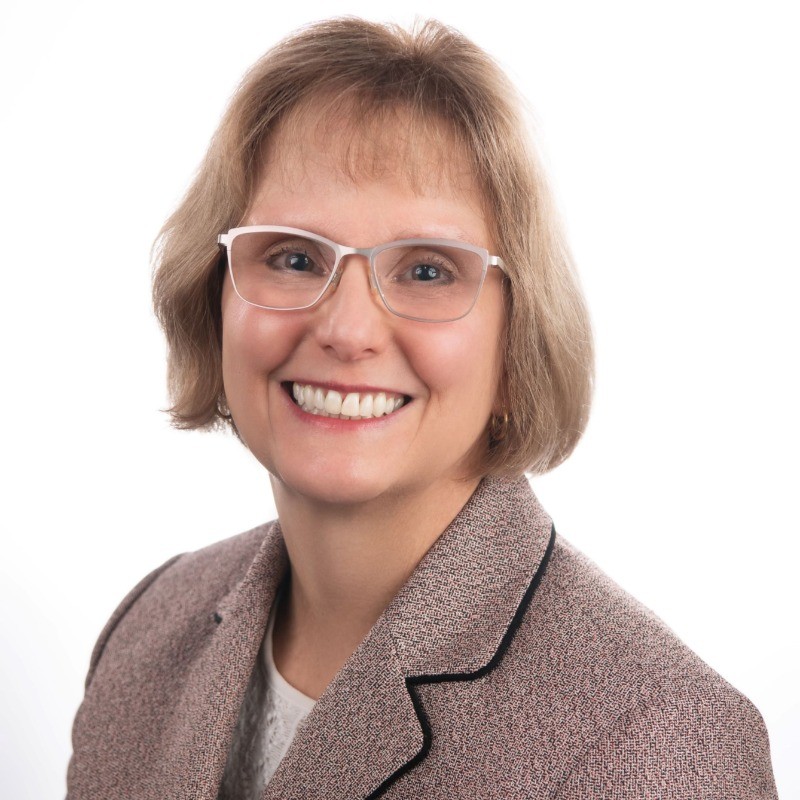
Eva M. Giles
College Savings Program Manager, Finance Authority of Maine
Three consecutive Morningstar Gold ratings tell us our plan works. The 529 Consortium helps us understand how to make sure the families who need it the most know about it.
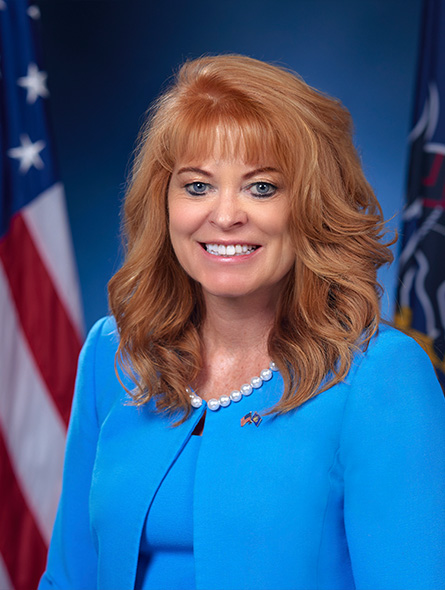
Stacy Garrity
State Treasurer of the Commonwealth of Pennsylvania
my529 successfully uses data-based decision making to help families save for education. The 529 Consortium’s analysis of industry-wide data will bolster understanding of the benefits of 529 plans for a broad audience.

Mark Cain
Executive Director of my529
Commonwealth Savers manages over $125 billion across 3.2 million accounts in its Invest529 and CollegeAmerica programs. At that scale, every percentage point of increased participation changes thousands of lives — but understanding which families aren't saving, and why, requires the kind of multi-state, research-driven approach no single program can build alone. The Consortium gives Virginia's data a national context and its policymakers evidence they can act on.

Mary G. Morris
CEO of Commonwealth Savers
Receive updates on new findings, state partner developments, and upcoming events.
Unsubscribe anytime. Privacy policy.